


When cell towers fail in a disaster, emergency alerts can arrive hours late or not at all. Xperi’s Jeff Jury is joining the chorus that the fix is already sitting in car dashboards with AM/FM, and that HD Radio is a multilingual, location-aware backstop in tandem.
Xperi SVP and General Manager of Immersive Entertainment Jeff Jury laid out the case in a post on the company’s blog, opening with the 1964 Alaska earthquake. After the quake knocked Anchorage AM station KENI off the air, reporter Genie Chance broadcast for roughly 30 hours from her car’s two-way radio, relaying survival instructions and messages between families.
Jury wrote, “And now, six decades later, when the power goes out, and the cell towers go quiet, radio is still the thing that keeps working.”
Recent disasters, he argued, have exposed the limits of cell-based warnings. Western North Carolina saw that play out after Hurricane Helene. Hendersonville, NC resident Denise Potter told Radio Ink she went nearly a week without reliable cell service. She had to walk to the top of her mountain neighborhood just to text her family that she was safe, while an old clock radio carried iHeartMedia’s Asheville stations broadcasting around the clock. Potter said, “The guys and gals on the radio have been nonstop since day one with information and that hasn’t been the case for anything else. Even our hospitals were cut off by landline, but the radio was working.”
During the 2025 Los Angeles County wildfires, cell towers went down and came back online with cached evacuation warnings that went out a day late, and some alerts told residents only that they were “in the area.” In July 2025, more than 100 people died in the Kerr County, TX flash floods after emergency alerts reportedly reached some residents hours after the water had risen.
Jury asked, “We’ve been trained to believe our phones are the ultimate lifeline in an emergency. So why does disaster after disaster keep proving that wrong?”
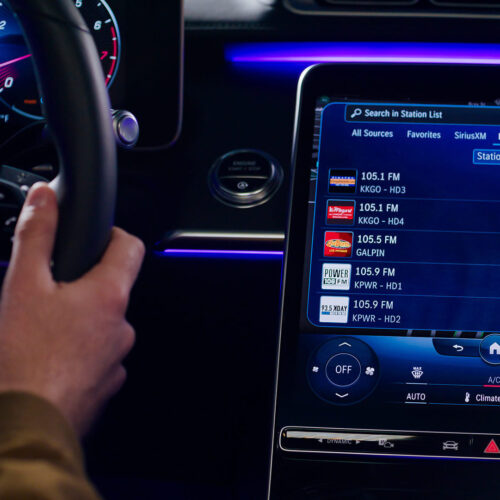
His pitch is that HD Radio can build on that reliability. The digital signal, which runs alongside a station’s AM or FM broadcast, can push written alerts to compatible receivers, target them geographically, and carry the same alert in multiple languages at once, such as English on a station’s HD1 channel and Spanish on an HD2 or HD3 subchannel. Some receivers can also wake from standby when a high-priority alert comes through. The Florida Public Radio Emergency Network already uses HD Radio’s audio and data channels during hurricanes to send evacuation routes and shelter updates to dashboard displays.
The argument lands as broadcasters press their emergency role in Washington. Earlier this month, the House passed the AM Radio for Every Vehicle Act, and at the end of August, NAB pushed back on parts of the FCC’s EAS modernization proposal, citing radio’s record of staying on the air when cell networks failed.
Jury concluded, “The next time the ground shakes, or the sky turns an ominous color, or the water starts rising faster than anyone expected, the radio in the car or on the nightstand doesn’t need a signal bar to find people. It just needs to be on.”