


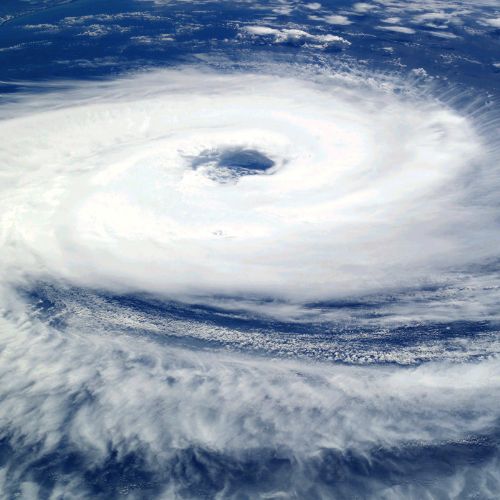
For lawmakers battling to keep AM radio in cars as a public safety tool, a new in-car data set from Hurricane Isaias shows what that looks like in practice, with listening to local stations claiming bigger shares of those in harm’s way as the storm made landfall.
The Cumulus Media/Westwood One’s Audio Active Group presented the findings, drawn from DTS AutoStage data on in-car AM/FM listening. In Mobile, tuning occasions fell 55% below the four-week baseline on Friday, October 9, when the storm hit, with 16,609 sessions against a baseline of 36,665. Saturday ran 37% below baseline, and Sunday was 4% below. The Friday figures cover six Cumulus stations, and Saturday and Sunday cover three.
Friday listening ran above its baseline from 9a to 11a, which the presentation attributes to last-minute shopping and drivers getting to safety. By Saturday at 3p, traffic volumes had returned to 77% of historical levels, though Saturday night tuning was down 44%. On Sunday, morning in-car occasions recovered to 86% of historical levels, and from noon to midnight listening recovered to 98%.
Share rose even as tuning fell. Mobile’s share grew 30% on landfall day, to 62% from 48% on a typical day. In Pensacola, Cumulus’s share was 45% on both Saturday and Sunday against 23% on a typical day, a 95% gain over the storm weekend.
In Panama City, four Christian stations, WayFM, K-LOVE, Family Life, and JOY FM, combined for a 25.14% share the week of October 5 to 11, up from 19.64% the week of September 14 to 20. The combined figure was 27.38% the week before. News/Talk WSB Atlanta posted its highest share and cume of the four weeks tracked during its storm coverage. Its average quarter-hour share rose to 6.62% from 6.27%, and its weekly cume to 10.46% from 9.98%.
The AM Radio for Every Vehicle Act passed the House on a voice vote on September 16 as H.R. 979 with 317 co-sponsors. Its Senate companion, S. 315, has been on the Legislative Calendar since the Commerce Committee approved it in April 2025. Senator Chuck Grassley (R-IA) said he hopes the bill passes by unanimous consent and otherwise expects it to ride on end-of-year legislation.
In September, Xperi’s Jeff Jury argued that when cell service fails in a disaster, car radio remains a dependable alert channel.
Sadly, I don’t see how this story backs the claim of the importance of AM radio in every car. The information shared at best lumps AM & FM into a single bucket.
It tells of four FM radio stations that garnered listening due to the hurricane.
And WSB News/Talk simulcasts its AM programming on 100,000 watt WSBB (FM), which I’m sure is more easily heard and most likely the one listeners gravitate to.
Radio management at WSB shifted its primary marketing away from the AM dial, focusing instead on its 100,000-watt FM simulcast, 95.5 WSB (WSBB-FM) AND they removed “750 AM” from much of their standard on-air slogans. Their news/talk format has been simulcast on WSBB-FM for 16 years now.
In car radio IS important. But AM stations are turning in their licenses, reducing power due to the land their towers sit on being more valuable etc
Do we really help broadcasters by not telling the whole story?
Comments are closed.