


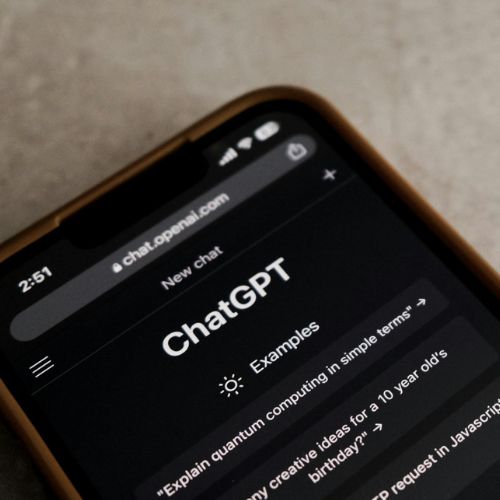
Getting better results out of ChatGPT or Gemini isn’t about luck; it’s about structure. That was the takeaway from the most recent CRS360 webinar, where a label executive broke down two frameworks radio can use to turn vague AI requests into usable work.
Prompt Me Like You Mean It, led by CRB Executive Director RJ Curtis, revisited one of CRS 2026’s most popular workshops this month, with Stoney Creek Records Director of National Promotion Stan Marczewski walking attendees through two frameworks for getting sharper results out of ChatGPT, Gemini, and other AI tools.
“Prompts matter because that’s how you communicate with AI,” Marczewski said. “If you put in great prompts, you’re going to get great answers. If you put in bad prompts, you’re going to get bad answers, or things that maybe aren’t true at all. Quality in, quality out.”
To illustrate a weak prompt, Marczewski used a one-line example: Write a liner for Jelly Roll. “That’s just very generic, right?” Marczewski said. “It will probably give you an answer, but it doesn’t know exactly what that means. Does it mean a liner for someone on the air? Does it mean an artist liner? Do you want it for your morning show? Is it a holiday liner?” He compared AI to an eager but literal-minded coworker. “Think of AI as like the smartest intern you’ve ever had, who takes everything you say literally.”
The first framework, RACE, is designed for generating ideas from scratch. Marczewski broke it into four parts: “Role, define who or what AI should be. Action, specify exactly what you want AI to do. Context, provide relevant background information. And then expectation, clarify the desired output format or style.”
TCREI, the second framework, stands for Task, Context, References, Evaluate, and Iterate. Developed by Google, it’s built for refining an idea into a full campaign rather than just generating one. Marczewski used it to expand a single contest concept, “Text Battle: You vs. the City,” into a complete on-air execution plan, feeding the tool a detailed task, station goals, target demographics, and references to past high-performing promotions like Secret Sound and Battle of the Sexes. “The magic happens when you evaluate what comes out, and then you make changes, and you iterate the idea,” Marczewski said. “The first thing that you get isn’t always going to be the end answer.”
Curtis asked Marczewski whether repeated use makes AI tools more useful over time. “Absolutely, it does,” Marczewski said. “It learns. Especially if you’re using the same one and asking similar questions all the time, it does learn from you and start to anticipate what you might need.”
Marczewski closed with a simple checklist for attendees to take back to their stations. “Define your goal, choose the right framework, draft your prompt, test it, and then save it and repeat it once you’ve got something that you like.” He also pushed back on the notion that AI threatens jobs in radio and promotion. “AI is not a replacement; it’s a creative partner,” Marczewski said. “It’s something to be used as a tool to be more creative and free up your time. It will unlock new possibilities, so just start small, tinker with it, and think big.”
Each month, Dara Kalvort walks Radio Ink subscribers through an exclusive, ready-to-use AI prompt like the ones covered above. Subscribe to Radio Ink for as little as $3.33 per month to get next month’s prompt.